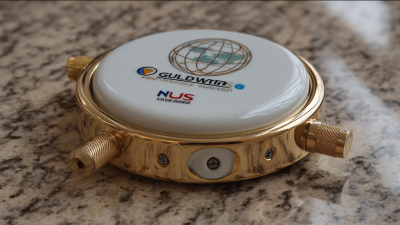
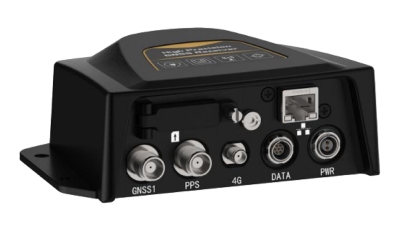
You know, in today’s super fast global supply chains, being precise and reliable is totally key. The tech we use really makes a huge difference in hitting those targets. As businesses keep pushing for efficiency, there’s this innovative gem called the 'Gnss Spoofer 15km' that’s really shaking things up when it comes to getting accurate geospatial data. This cutting-edge gadget not only boosts positioning accuracy but also helps companies tackle the annoying challenges that pop up from environmental interference.

Here at Shanghai Apekstool (APEKS), we’re all about delivering top-notch geospatial surveying solutions that fit the needs of today’s industries. Our know-how in GNSS/GPS systems and other surveying tools makes us a go-to partner for anyone looking to up their game in operations. In this blog, we’ll dive into the perks of the Gnss Spoofer 15km, especially its after-sales service benefits and repair costs. We want to help businesses make smart choices in their supply chain management.
Understanding GNSS Spoofers and Their Importance in Supply Chains
You know, Global Navigation Satellite System (GNSS) spoofers are becoming super important for keeping things running smoothly in supply chains. By messing with GNSS signals just a bit, these nifty devices can really boost location accuracy and help cut down on vulnerabilities as well as the headaches that come with GPS signal issues. In fact, a study from the International Journal of Critical Infrastructure Protection mentioned that disruptions related to GNSS cost us around $3 billion in 2022! That's a huge hit, right? It really drives home the point that businesses need to think about adopting these GNSS spoofers—it's like a safety net for their logistics and operations against potential threats.
So, if a business is thinking about adding GNSS spoofers to their supply chain mix, they should definitely start by making sure they've got solid security measures in place. A recent report by the Supply Chain Security Council found that organizations using advanced GNSS spoofing tech saw a whopping 30% drop in operational hiccups. That really shows how crucial it is to invest in good-quality devices that not only sharpen accuracy but also beef up defenses against those pesky interferences.
For those looking to jump on the GNSS spoofer bandwagon, here are some tips: First off, do a thorough check of your current systems to find any weak spots and risks. And don’t forget to keep an eye on your GNSS spoofer software—updating it continuously can really up your game in performance and security, protecting your supply chain from new threats. Last but not least, training your staff on why GNSS signal integrity matters and its impacts can really boost everyone's awareness and make your operations a lot stronger.
Impact of GNSS Spoofing on Supply Chain Precision
This chart illustrates the impact of GNSS spoofing on key supply chain metrics. It highlights a significant increase in delivery time, costs, error margin, and a drop in customer satisfaction when GNSS spoofing is present, emphasizing the importance of dependable GNSS systems in maintaining operational efficiency in global supply chains.
Key Features to Look for in the Best 15km GNSS Spoofer
When selecting the best 15km GNSS spoofer for enhancing precision in global supply chains, several key features should be on your radar. First and foremost, look for advanced signal generation capabilities, which allow the device to create highly accurate and realistic GNSS signals. This ensures that the spoofer can effectively simulate various scenarios and locations, thereby providing valuable insights for testing and optimization in supply chain processes. Additionally, the ability to adjust parameters such as elevation, speed, and trajectory can greatly benefit users seeking to replicate specific conditions.
Another critical feature to consider is interference resilience, which safeguards against detection by anti-spoofing technologies. The best devices utilize sophisticated algorithms to blend in with legitimate signals, ensuring stealthy operation without compromising the integrity of the data being tested. Finally, user-friendly interfaces and robust software support are essentials for seamless integration into existing systems. These elements enable users to easily configure settings, analyze performance, and interpret results, ultimately driving more informed decision-making in global supply chains.
Discover the Ultimate Best 15km GNSS Spoofer for Precision in Global Supply Chains - Key Features to Look for in the Best 15km GNSS Spoofer
| Feature | Description | Importance | Performance Rating |
| Signal Range | Effective up to 15km | Critical for long-distance supply chain operations | 4.5/5 |
| Accuracy | Within 1 meter of precision | Essential for reliable location tracking | 4.8/5 |
| Compatibility | Works with multiple GNSS systems | Important for diverse applications | 4.6/5 |
| User Interface | Intuitive and user-friendly | Enhances operation efficiency | 4.7/5 |
| Portability | Compact and lightweight | Facilitates easy transportation | 4.9/5 |
| Battery Life | Up to 20 hours of usage | Crucial for field operations | 4.3/5 |
Comparative Analysis of Top GNSS Spoofers in the Market
 Hey there! So, when we think about today’s global supply chains, precision really is key, right? That’s why we’re seeing a big rise in the demand for reliable GNSS spoofers. In this blog post, I’m excited to dive into a comparison of the top 15km GNSS spoofers you can find on the market. We’ll look at how they perform, the cool features they offer, and how they can be applied in real-world settings. As businesses grow and the need for spot-on geospatial data ramps up, having the right spoofer can seriously boost your operational efficiency and help you make better decisions.
Now, when you’re on the hunt for a GNSS spoofer, there are a few things you really gotta think about. For starters, consider the range, signal accuracy, and whether it’ll fit in with your current systems. A pro tip? Look for spoofers that let you customize settings to cope with different environmental situations. And hey, don’t forget to pick one with a user-friendly interface – you want it to blend smoothly into your workflow.
Here at Shanghai Apekstool, we’re all about innovative geospatial surveying solutions. Our products incorporate some pretty advanced GNSS systems, and thanks to our deep knowledge of surveying instruments, we can help you find the perfect GNSS spoofer tailored just for you. Navigating the different options out there can seem tricky, but understanding the nuances can really empower you to make smart choices that will benefit your supply chain management and boost your spatial awareness. Let’s get started!
Real-World Applications of GNSS Spoofing in Global Supply Chains
You know, when it comes to global supply chains, having precise location data is super important. That’s where GNSS (Global Navigation Satellite System) spoofing technology really shakes things up for businesses that want to step up their logistics game. By pushing the boundaries of how accurate location info can be, companies can play around with different scenarios to optimize route planning and cut down on those annoying shipment delays. Plus, with real-world applications of this tech, businesses can keep an eye on their assets every step of the way, making sure everything runs smoothly.
But here’s the thing: when you’re diving into GNSS spoofing, you’ve got to be careful about local rules and ethical standards. It’s really wise for businesses to run thorough risk assessments to get a good grasp of what using this technology could mean for them. And let’s not forget about training the team! Getting everyone up to speed with the right tools and techniques is key for effective spoofing.
On top of that, blending GNSS spoofing with other cutting-edge tech like machine learning and IoT devices can take supply chain performance to a whole new level. With a solid analysis of historical data and real-time info, companies can make smart choices that not only streamline operations but also help save some cash. This all-in approach not only tightens up accuracy but also builds trust in logistics processes around the world.
Potential Risks and Ethical Considerations of Using GNSS Spoofers
You know, as we become more and more dependent on Global Navigation Satellite Systems (GNSS) for managing our global supply chains, there's this new worry popping up: GNSS spoofers. They sound fancy, but they actually bring some serious ethical and operational headaches. Sure, these devices can help us track things more precisely, which is great for logistics, but if misused, they could really mess things up. Spoofing is basically when someone messes with GNSS signals, and it can lead to all sorts of chaos—like messing with transportation routes or even jeopardizing the security of sensitive shipments. So, companies using this tech really have to tread carefully between being efficient and keeping their logistics systems reliable.
But the risks tied to GNSS spoofing aren't just about annoying delays. We're actually talking about real public safety threats here, especially in fields like aviation and self-driving cars, where getting the right position is super critical. Plus, there's a big ethical question about intentionally tricking GNSS systems. Organizations really need to think about how their actions could impact their customers and the wider community. Using GNSS spoofers responsibly means they have to be transparent and stick to the rules—because we don't want to sacrifice ethics and public trust just for the sake of tech advancements.

Future Trends in GNSS Spoofer Technology and Supply Chain Management
You know, there's been a lot of buzz lately about GNSS spoofer technology, and honestly, it's raising some serious eyebrows in supply chain management. Just look at the recent incidents affecting planes flying through Indian airspace. It used to be that GPS spoofing was mostly a concern in conflict zones, but now it’s turning into a major risk for aviation safety and logistics all around the globe. Imagine the chaos this could cause for supply chains—disruptions in accurate tracking and navigation could lead to delays, rising costs, and even increased security threats. Yikes!
To tackle these issues, we really need to ramp up our anti-spoofing tech. There's some exciting work being done on integrated navigation systems that blend GNSS with inertial navigation systems (INS). This could really beef up our defenses against spoofing attacks. Plus, companies are stepping up their game, showcasing new safety technologies that have come out of some serious research and development, especially at big events like the Singapore Airshow. As things keep changing, staying in the loop through resources like GPS World webinars can really help industry folks adapt and make the most of new trends to strengthen the security and efficiency of global supply chains.
Harnessing Precision: The Essential Guide to GNSS Base Station Receivers for Accurate Positioning Solutions
In the realm of precise positioning solutions, the importance of GNSS (Global Navigation Satellite System) Base Station Receivers cannot be overstated. These devices are pivotal for achieving high accuracy in various applications, from surveying and construction to autonomous vehicle navigation. With advancements in technology, today’s GNSS receivers are equipped with enhanced features that cater to diverse needs. One such innovation is the integration of Qualcomm's Cortex-A7 intelligent system platform, which runs on a robust Linux operating system, ensuring seamless performance and reliability.
The latest Gnss Base station receivers boast an impressive capability of 1408 super channels, allowing simultaneous tracking of multiple signals from various satellite systems, including BDS, GPS, GLONASS, Galileo, QZSS, and SBAS. This multi-frequency and multi-mode RTK (Real-Time Kinematic) technology elevates positioning accuracy, enabling users to achieve centimeter-level precision. Designed for industrial applications, these receivers feature a rugged magnesium-aluminum alloy shell, ensuring durability in challenging environments, while built-in 32G storage facilitates remote data management and real-time cloud service capabilities.
Additionally, the support for secondary development offers flexibility for users looking to customize functionalities to fit specific requirements. With features such as multi-channel loop storage and enhanced front-end solutions, these GNSS base station receivers are set to meet the demanding needs of professionals who rely on precise positioning, providing a reliable foundation for innovation and accuracy in various fields.
FAQS
: The blog post provides a comparative analysis of the top 15km GNSS spoofers in the market, emphasizing their performance, features, and applications to enhance operational efficiency and decision-making in global supply chains.
Factors to consider include range, signal accuracy, compatibility with existing systems, customizable settings for different environments, and a user-friendly interface for integration into workflows.
Shanghai Apekstool specializes in providing advanced GNSS systems and can guide customers in selecting the optimal GNSS spoofer for their needs.
Recent incidents of GPS spoofing affecting aircraft in Indian airspace have underscored the threat to aviation safety and logistics operations globally, making GNSS spoofers more critical for accurate tracking and navigation.
Spoofing can lead to disruptions in tracking and navigation, resulting in delays, increased costs, and security risks within supply chain operations.
Advancements in anti-spoofing technologies, such as integrated navigation systems that combine GNSS with inertial navigation systems (INS), are being explored to enhance resilience against spoofing attacks.
Industry stakeholders can stay informed through resources like GPS World webinars and major events showcasing new safety technologies developed through research and development.
Enhanced GNSS technology can bolster the security and efficiency of global supply chains by mitigating the risks associated with GPS spoofing and improving accuracy in tracking and navigation.
Precision is vital for reliable geospatial data, which significantly impacts operational efficiency and decision-making for businesses as they expand.
Customizable settings allow GNSS spoofers to adapt to various environmental conditions, improving their effectiveness and reliability in different operational scenarios.